Hello! I’m Madeline.
I’m a communication researcher studying how young people become citizens and changemakers through their interactions with media.
My research asks: How do youth use media and communication technologies to make sense of power? What role do their media practices play in how they negotiate agency within systems that often exclude them? What would it mean for our media ecosystems to support their civic and political participation?
I am doctoral student in the Technology, Media, and Learning program at Teachers College, Columbia University, where I am advised by Dr. Ioana Literat.
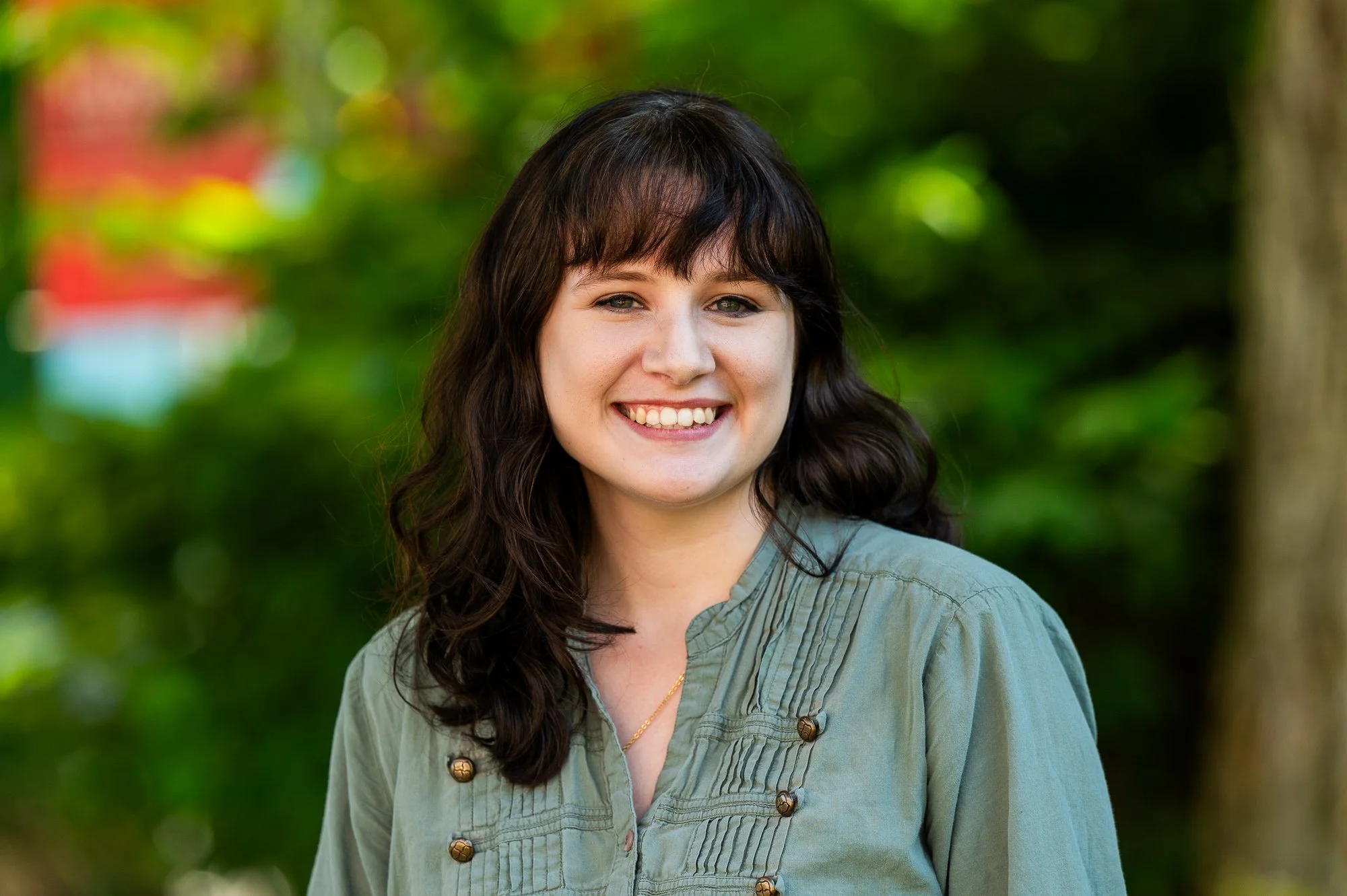
About me
My work has long been grounded in the conviction that information is a key component of democratic participation. Originally trained as a journalist, I spent the early years of my career reporting for news organizations including the Anchorage Daily News, The New York Times, and The Atlanta Journal-Constitution. The experience of being entrusted — and in many cases, explicitly not trusted — with stories of my neighbors motivated me to think more deeply about the relationship between news media and the public. How do the stories we tell privilege some experiences over others? How does journalism influence how people relate to and interact with civic institutions?
I am especially interested in these questions as they relate to children and youth. To me, young people are not just citizens in the making, but people who have an enormous stake in the political decisions happening around them. How do they come to think of themselves as citizens, and what role can media play in supporting them?
Even after leaving the practice of journalism, I remained interested in the to the value of news as a civic influencer. I received my M.A. in Child Study and Human Development from Tufts University, where my thesis explored youth voice practices within news media organizations. During this time, I also worked with the Center for Information and Research on Civic Learning and Engagement (CIRCLE), where I contributed to projects exploring the connections between youth, media, and democracy: what it means for a community to have a robust media ecosystem that contributes to equitable youth participation, what it means for media organizations to create content that is responsive to young people’s perspectives and needs, and what role media creation plays in whether young people feel informed and empowered to participate politically.
Today, I work with the Media and Social Change Lab (MASCLab) at Teachers College, drawing on both communication theory and developmental science to investigate the role media and digital technologies play in youth civic identity development. My work takes a primarily qualitative approach and intersects with questions of youth voice, media literacy, and civic learning, among many others.
My commitments
My research is undergirded by a set of values that ground my approach and inform my decisions about what to explore and with whom to collaborate. If you share the same set of commitments, I would love to hear from you!
-
We create more just and equitable systems when all people have say in the decisions that affect them. This includes children and youth, who have a huge stake in the issues facing their communities but who do not always have the opportunity to voice their perspectives. Democracy becomes more representative when we listen to the valuable things young people have to contribute, even before they reach legal voting age.
-
My work is driven by a strengths-based approach that sees young people not just as the citizens of tomorrow, but the citizens of today. Just like adults, youth are members of their communities, and they have both the have the agency and competency to act upon it, even if their civic and political actions may look different from those of adults. Young people are constantly making meaning of the events unfolding around them, and many are active in expressing themselves around political issues. There is value in learning from how they see the world and giving them opportunities to participate in decision-making.
-
Even though young people are already civic agents, participation is not automatic, but a habit that is developed over time. Adults can support youth in accessing opportunities to build civic skills and knowledge.
Contact me
Interested in collaborating or learning more? Fill out some info and I’ll be in touch shortly!